

THRYVE Team
Wellness Clinic
Direct-to-consumer lab testing makes it easier to order blood work without a traditional doctor’s referral, but not every test or panel offers the same value. Learn what to know about costs, biomarker panels, at-home blood draws, accuracy, and provider interpretation before choosing a testing service.
Direct to consumer lab testing is any arrangement where you purchase a lab panel yourself rather than receiving one through a physician visit. A licensed provider affiliated with the testing company signs the requisition, which is a legal requirement in most states, but you choose the panel and you receive the result.
Three delivery models exist, and they are not equivalent:
Draw-station model. You buy online, then visit a partner patient service center for a standard venous draw performed by a phlebotomist.
Self-collection model. A kit ships to your home. You collect a capillary sample from a fingertip or use a device-assisted collector, then mail it back.
Mobile phlebotomy model. A certified phlebotomist travels to your home or workplace for a full venous draw. Mobile laboratory services cost more but support the widest range of panels.
Many direct-to-consumer services use CLIA-certified laboratories that also process clinician-ordered testing. Laboratory quality is only one part of the process, however. Test selection, specimen collection and handling, and clinical interpretation all affect how a result should be understood.

How Much Does a Blood Test Cost?
Pricing is the most searched question in this category and the least clearly answered. The honest answer to how much does a blood test cost is that it depends on panel breadth, collection method, and whether interpretation is included.
Panel Type | Typical Range | What's Included | Best For |
Single marker | $20 to $60 | One analyte, e.g. vitamin D or TSH | Rechecking a known value |
Basic wellness | $60 to $150 | CBC, metabolic panel, lipids | General baseline |
Full blood panel | $200 to $500 | 30 to 60 markers across systems | Comprehensive first look |
Hormone panel | $150 to $400 | Sex hormones, thyroid, cortisol | Fatigue, cycle, libido concerns |
Mobile draw add-on | $50 to $150 | Phlebotomist travel fee | Mobility limits, rural areas, convenience |
Provider interpretation | $0 to $200 | Clinical review of results | Anyone who wants the data to mean something. Included by default in some plans |
Illustrative US cash-pay ranges based on publicly listed prices reviewed August 2026. Actual prices vary by test, provider, laboratory, collection method, and location. Confirm current pricing directly.
The line that catches people out is the last one. A full blood panel cost of $300 sounds reasonable until the result arrives as a PDF with eleven values flagged in red and no explanation. Clinical interpretation can be one of the most valuable parts of comprehensive testing because flagged results need context before they can guide decisions. .
Pay Per Panel vs. Prepaid Balance
Not every provider prices the same way, and the structure affects what you actually get for the money.
Factor | Pay Per Panel | Prepaid Balance |
How you pay | Set price for each purchased panel | Prepaid amount applied toward eligible tests |
Test selection | Depends on provider; may use predefined panels | Tests can be selected and charged against the available balance |
Interpretation | May be included or separately charged | Depends on what the plan includes |
Best for | Straightforward one-time purchases | Testing needs that may change over time |
Neither pricing structure is inherently better. What matters is which tests are included, whether clinical interpretation is provided, and whether the testing approach matches the patient's needs.
The distinction matters most for what happens after the result arrives. A per-panel purchase usually ends when the PDF is delivered. Whether either model includes provider interpretation depends on the service, so this should be confirmed before purchasing.
How a Prepaid Balance Works in Practice
THRYVE Wellness Medical uses this structure, so its pricing is a useful worked example. THRYVE calls the balance diagnostic credits, and one credit equals one dollar, so the arithmetic is straightforward.
Option | Price | Diagnostic Credits Included |
Comprehensive Health Assessment | $399 one-time | $150 in credits |
Thryve Membership | $89 per month plus a one-time setup fee | $100 in credits per quarter |
Single telehealth consult | $69 one-time | Consultation only |
Eligible individual tests can then be paid for using that diagnostic-credit balance. Because credits and dollars are equivalent, the cost of each test reads directly:
Test | Credits | Cost |
Complete blood count | 6 | $6 |
Lipid panel | 12 | $12 |
Thyroid stimulating hormone | 15 | $15 |
Total testosterone | 16 | $16 |
Vitamin D, 25-hydroxy | 22 | $22 |
PLAC test | 50 | $50 |
Credit values shown for illustration. Current test costs are listed on the provider's diagnostic credits page.
The benefit of this structure is flexibility rather than a direct dollar-for-dollar comparison with a fixed panel. The diagnostic-credit balance can be applied to individual tests selected for the patient's situation, allowing the combination of tests to vary rather than requiring the purchase of the same predefined bundle each time.
The practical effect is that a broad initial workup and a narrow follow-up draw on the same balance, so the panel can change as your questions change without repurchasing a fixed bundle each time. The same structure can also support more targeted follow-up testing when a broad repeat panel is not clinically necessary.
8 Truths About Direct to Consumer Lab Testing
Laboratory quality is only part of the picture. Laboratory testing is subject to quality controls, but test selection, sample collection, handling, and timing can also affect how results should be interpreted.
More markers is not better. As more markers are tested, the likelihood of seeing at least some results outside their reference intervals can increase, including in otherwise healthy people. Many commonly used reference intervals are designed around a defined percentage of a reference population, meaning some healthy people can fall outside the reported range.
Fasting requirements depend on the test. Food intake can affect certain measurements, including glucose and triglycerides, while many other tests do not require fasting. Follow the preparation instructions provided for the specific tests being ordered.
Timing can matter for certain tests. Some hormones vary by time of day, menstrual cycle phase, medications, and other factors. When timing is clinically relevant, collection instructions and interpretation should account for it.
Capillary and venous samples are not identical. Finger-prick collection works well for many analytes and poorly for others, including potassium and certain hemoglobin measures.
A flagged value is not a diagnosis. Results need to be interpreted in the context of symptoms, medical history, medications, and other relevant clinical information. Depending on the finding, repeat or additional testing may be appropriate.
Trends add context a single result cannot. One panel is a snapshot. When clinically appropriate, comparing results over time can provide useful context, but repeat testing should be guided by the individual's health situation and the provider's recommendations.
Direct-to-consumer testing is often purchased out of pocket, although coverage and HSA/FSA eligibility vary by test, service and plan. Check with your plan administrator or tax adviser.
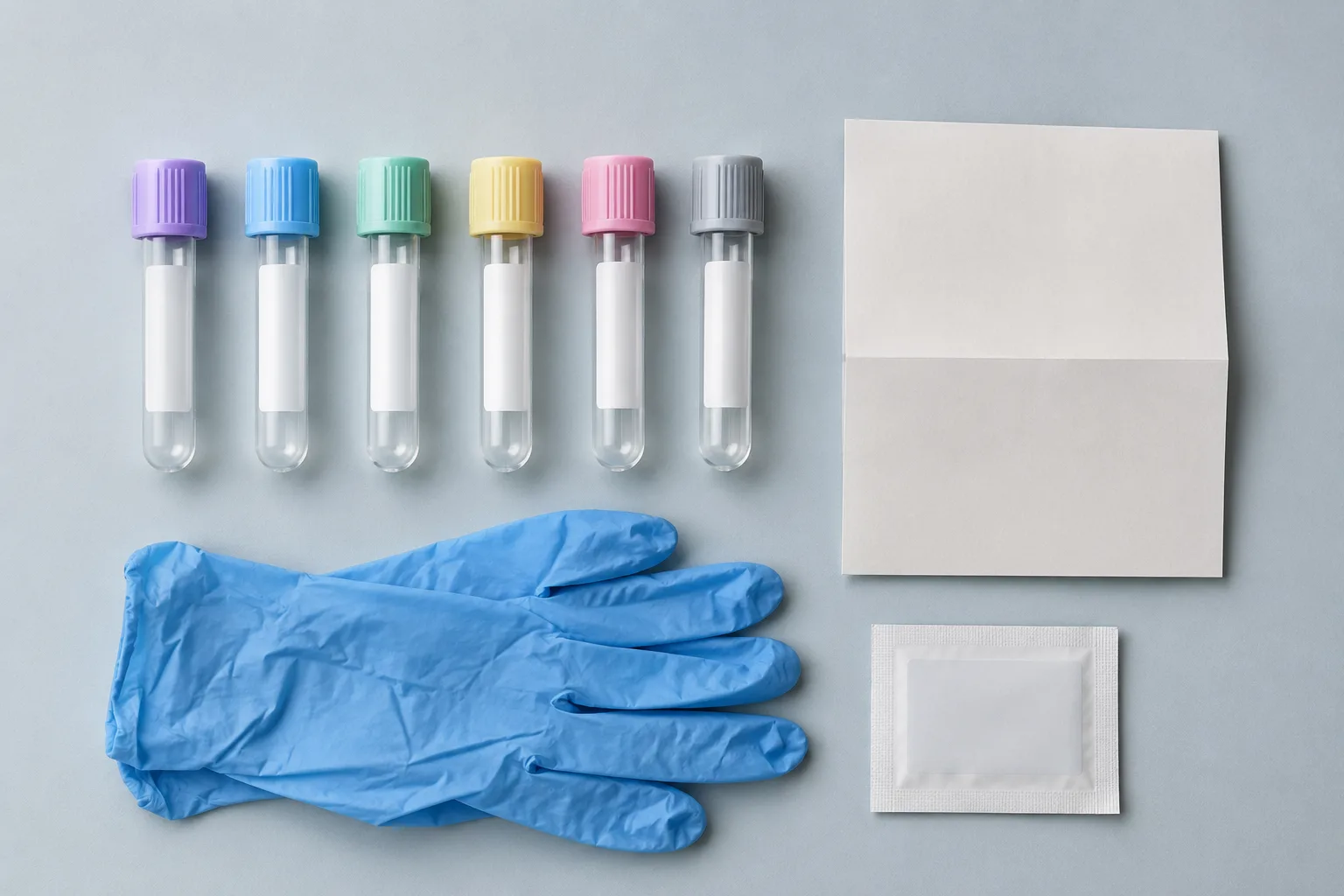
Biomarker Blood Test Panels: What Actually Gets Measured
A biomarker is any measurable biological indicator. A biomarker blood test groups these into systems, which is a more useful way to think about panel selection than counting markers.
System | Representative Markers | What It Tells You |
Metabolic | Glucose, HbA1c, insulin | How your body handles fuel over time |
Cardiovascular | Lipid panel, ApoB, hs-CRP | Circulating lipids and low-grade inflammation |
Hormonal | TSH, Free T3/T4, testosterone, estradiol | Hormone and endocrine function |
Nutritional | Vitamin D, B12, folate, ferritin | Stores and deficiency risk |
Organ function | ALT, AST, creatinine, eGFR | Liver and kidney performance |
Hematologic | CBC with differential | Red cells, white cells, platelets |
Biomarker analysis is the process of reading those values together rather than one at a time, and a biomarker assay is simply the laboratory method used to measure a single one of them. Both terms appear constantly in marketing copy. For a consumer, neither carries much practical meaning beyond confirming that something was measured. What matters is whether the panel matches your actual question.
Providers offering biomarkers testing typically build panels around a presenting concern rather than selling a fixed list, which is the difference between data you can use and data you simply own.
How Lab Testing Fits Into Functional and Integrative Medicine
Laboratory testing can be one component of a broader functional and integrative medicine approach. Rather than viewing a lab result in isolation, providers may consider testing alongside a patient's health history, symptoms, lifestyle, nutrition, and individual health goals.
A personalized healthcare journey may involve several connected steps:
Understand more → Create a personalized plan → Take action → Monitor progress → Continue appropriate care
Laboratory and biomarker testing can provide information that helps a qualified healthcare provider understand aspects of a patient's health. Depending on the individual circumstances, care may also involve nutrition, lifestyle interventions, supplements or nutraceuticals when appropriate, conventional medical treatment, and ongoing provider support.
Testing is therefore not the entire care model. It is one tool that can support a broader provider-led approach to functional and integrative medicine.
Blood Draw at Home vs. Draw Station vs. Mobile Phlebotomy
Factor | Self-Collection Kit | Draw Station Visit | Mobile Phlebotomy |
Who collects | You | Phlebotomist | Phlebotomist at your location |
Sample type | Capillary or device-assisted | Venous | Venous |
Panel range | Limited by volume | Full | Full |
Added cost | Lowest | Usually none | $50 to $150 travel fee |
Travel required | None | Yes | None |
Turnaround | Varies by test and laboratory, plus shipping time | Varies by test and laboratory | Varies by test and laboratory |
Best for | Routine monitoring | Comprehensive panels | Mobility limits, rural access, busy schedules |
Arranging a blood draw at home has become steadily more common, and searches for mobile phlebotomy services near me have grown with it. The reason is practical rather than clinical. For anyone with limited mobility, small children at home, or a 45-minute drive to the nearest patient service center, the travel fee costs less than the half-day it replaces.
Getting Blood Work Done: What to Expect
Getting blood work done is straightforward once you know the sequence. Seven steps cover almost every scenario:
Choose the panel around a question, not around marker count. Asking why you are exhausted at 3 p.m. points to a different panel than asking what your cardiovascular baseline looks like.
Check fasting requirements before booking. Some tests require fasting, while others do not. Follow the specific preparation instructions provided for your test.
Follow any timing instructions provided for your tests. Certain tests may need to be collected at a particular time of day or under specific preparation conditions.
Hydrate normally. Well-hydrated veins make the draw faster and easier.
Bring your medication and supplement list. Biotin in particular can interfere with several common assays.
Record the collection date and time. Future comparisons depend on it.
Schedule the interpretation before you see the results. This is the step that turns data into a decision.

When This Isn't the Right Choice
You have symptoms that may require urgent medical attention. Chest pain, severe shortness of breath, sudden neurological symptoms, or other potentially serious symptoms should be evaluated promptly rather than through routine direct-to-consumer testing.
You are managing a diagnosed condition. Monitoring belongs with the provider treating you, so results land in the same record.
You want a diagnosis. Labs support diagnosis. They do not deliver one alone.
You have a bleeding disorder or take anticoagulants. Collection should be supervised.
The result would cause significant anxiety without support. Some people find unexplained flagged values genuinely distressing, and that is a reasonable thing to plan around.
Frequently Asked Questions
Is direct to consumer lab testing accurate?
Laboratory testing in the United States is subject to CLIA requirements designed to ensure the quality and reliability of laboratory testing. Laboratory quality is only one part of the process. Test selection, sample collection, handling, methodology, and clinical interpretation can all affect how results should be understood.
How much does a blood test cost without insurance?
Single markers generally run $20 to $60, basic wellness panels $60 to $150, and comprehensive panels $200 to $500. Mobile collection adds a travel fee. Some laboratory testing expenses may be eligible for HSA or FSA reimbursement depending on applicable rules and your plan. Check with your plan administrator.
Can I get a blood draw at home?
Yes, through two routes: a self-collection kit you use yourself, or mobile phlebotomy where a certified phlebotomist performs a standard venous draw at your location. Mobile collection supports a wider range of panels.
Do I need a doctor's order?
Direct-to-consumer lab testing generally refers to services that allow consumers to select and purchase laboratory testing without first obtaining an order from their own physician. Ordering requirements vary by state, laboratory, test, and service model; some services use an affiliated clinician to authorize testing where required.
How long do results take?
Turnaround varies by test and laboratory. Self-collection kits also include shipping time in both directions, which adds to the total. The service should state expected timing for the specific panel you order.
Final Thoughts
Direct-to-consumer lab testing has made blood work more accessible by allowing consumers to arrange eligible testing without the traditional sequence of scheduling a separate office visit first. Availability, ordering requirements, collection options, and turnaround times vary by test, laboratory, and location.
What has not changed is the distance between having a number and knowing what to do with it. The laboratory work is the straightforward part. Choosing a panel that answers your actual question, collecting the sample properly, and reading the values against your own history and symptoms is where the value sits, and none of that happens automatically at checkout.
If one thing from this guide is worth carrying forward, it is this: decide who will help you interpret the results before you order the test, not after the PDF lands in your inbox.
Understand Your Results With Provider-Guided Care
THRYVE Wellness Medical is a telehealth clinic offering panels of more than 300 biomarkers, at-home blood draws by licensed phlebotomists, and board-certified provider consultations. Available to patients in Texas, South Carolina, and North Carolina.
Book your lab panel with THRYVE
This article is for educational purposes and is not medical advice. Individual results vary. Always consult a licensed healthcare provider before starting, stopping, or changing any treatment or testing plan.