

THRYVE Team
Wellness Clinic
Fasting instructions are usually four words long and raise about a dozen questions. Water or not, coffee or not, what happens if you forgot, and whether your particular test needed it at all. Here are the answers, including the one for people who already ate.
Fasting for blood work generally means eight to twelve hours with nothing but plain water. Water is allowed and encouraged. If you were instructed to fast, plain water is the safest default unless your test instructions specifically say otherwise. Not all tests require fasting, and the instruction supplied with your specific test overrides any general rule. If you have already eaten or had coffee, tell the laboratory staff rather than saying nothing.
How long to fast before blood work is the question lab orders rarely answer. They tend to say fast before this test and stop there. That leaves a set of questions people then search at eleven at night, or at six in the morning in a car park outside the draw site.
This covers all of them, including the one most articles skip: what to do when you have already broken the fast and your appointment is in an hour.
How Long Do You Need to Fast?
For many fasting blood tests, the usual fasting period is eight to twelve hours, although the exact duration depends on the test, according to Cleveland Clinic guidance on fasting for blood work.
Fasting longer than instructed is not necessary. The appropriate fasting period depends on the test, so follow the instructions from the laboratory or ordering provider rather than extending the fast on your own.
The practical arrangement most people land on: finish eating in the evening, book the draw for early morning, and the majority of the fast happens while asleep. That is why fasting lab work is usually scheduled first thing.
Can I Drink Water Before a Fasting Blood Test?
Yes, and it is actively recommended. Can I drink water before a fasting blood test is among the most searched versions of this question, and the answer is reassuring.
Plain water is generally permitted during fasting blood work. Staying hydrated may also make it easier to collect a blood sample.
Stick to plain water unless your test instructions say otherwise. Flavored or infused water falls outside the usual plain-water fasting guidance.
This is one of the more common points of confusion, because people assume a fast means nothing at all. For blood work it generally does not.
Can You Drink Coffee Before a Blood Test?
Can you drink coffee before a blood test deserves a straight answer, because the advice online genuinely conflicts.
Some sources state that black coffee is acceptable provided it contains nothing else. Cleveland Clinic advises against coffee, including black, when fasting for blood work.
Because preparation requirements depend on the test, follow the instructions provided with your order. If those instructions call for fasting and do not specifically permit coffee, plain water is the safer choice.
The same principle applies to tea and other drinks. When fasting instructions say nothing except plain water, do not assume another beverage is equivalent.
What Else Breaks a Fast
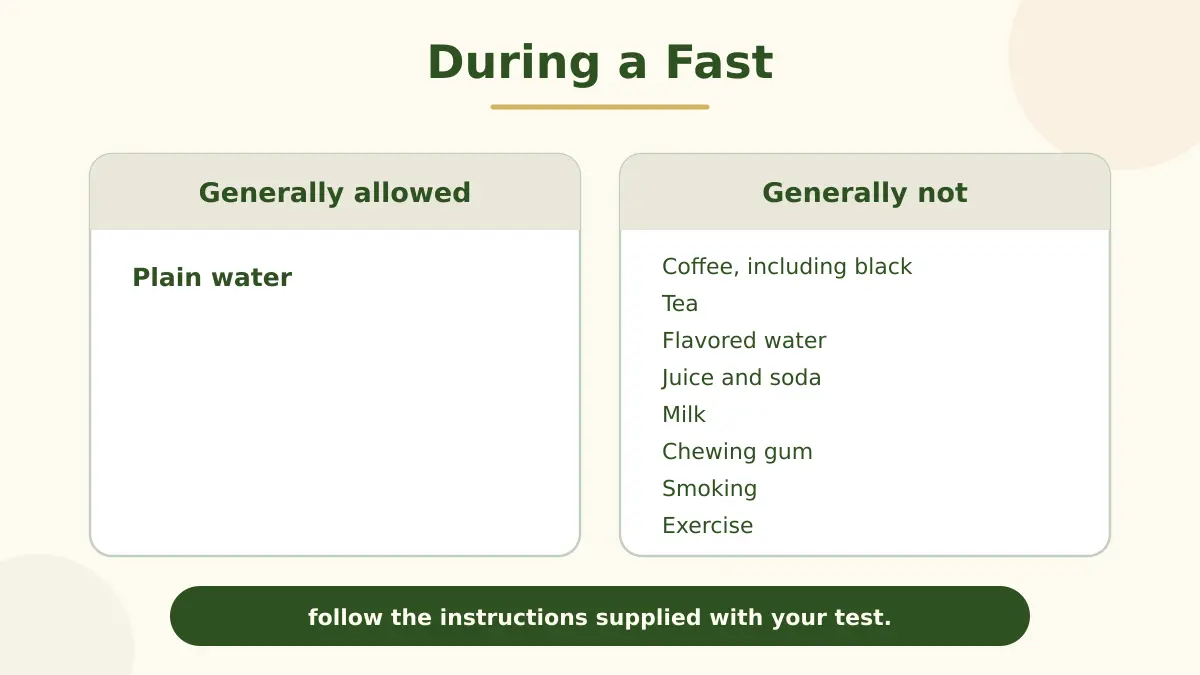
The things that catch people out are rarely meals.
Item | Allowed during a fast |
Plain water | Yes, and encouraged |
Flavored or infused water | No |
Coffee, including black | Not unless your instructions permit it |
Tea, including plain | Not unless your instructions permit it |
Juice, soda, milk | No |
Chewing gum | No, including sugar-free |
Smoking | No |
Alcohol | Follow your test instructions; some tests may require avoiding it for longer |
Exercise | No during the fasting period |
Chewing gum is the one people are most surprised by. MedlinePlus advises against chewing gum, smoking, or exercising while fasting for a blood test.
What About Medications and Supplements?
Do not stop, delay, or change a prescribed medication just to prepare for fasting blood work unless your healthcare provider has instructed you to do so. If you are unsure whether a medication affects your test preparation, ask the provider who ordered the test.
Supplements are a separate question worth raising, since some can affect certain test results. Biotin in particular is a recognized source of interference with some assays, and the FDA has warned that it can significantly interfere with certain laboratory tests. Mention everything you take, including anything taken occasionally, when the test is ordered.
Do not stop a supplement solely because of this article. Ask the ordering provider or laboratory whether any preparation is needed for your specific test.
Do You Need to Fast for CBC Blood Work?
Do you need to fast for cbc blood work? Generally no. A complete blood count measures cell counts rather than substances that shift after eating, and it is not typically a fasting test.
Here is the broader picture, though the instruction supplied with your own test always takes precedence.
May require fasting depending on the order | Often does not require fasting on its own |
Fasting blood glucose | Complete blood count (CBC) |
Certain lipid testing | Hemoglobin A1c |
Some metabolic panels | Many thyroid tests |
Whether you need to fast depends on the specific tests ordered and the instructions you received. If several tests are being performed together, preparation may be determined by the test with the fasting requirement.
If you're arranging testing yourself, our guide to direct-to-consumer lab testing explains what to consider before ordering and how different testing options work.
Are you supposed to fast before blood work as a rule? No. You fast when the order says to fast. If the instruction is unclear, contact the laboratory or ordering provider before the appointment so you know how to prepare.
I Accidentally Ate Before a Fasting Blood Test. Now What?
I accidentally ate before a fasting blood test is a search made at short notice, so here is the answer first.
Tell the phlebotomist or the laboratory staff before the draw. Do not proceed without saying anything. That single step is the entire answer, and it is the one people most often skip because they feel awkward about it.
What happens next depends on what you ate, how long ago, and which test was ordered. Depending on the test and the laboratory's instructions, possibilities may include:
The draw goes ahead with a note recorded that the sample was non-fasting, so whoever interprets the result knows the context
The appointment is rescheduled so the test can be completed under the required fasting conditions
The test proceeds unaffected, because it was not a fasting test in the first place
The important step is disclosure. Telling the laboratory staff that you ate allows them to decide whether the test can proceed and ensures the fasting status is not assumed incorrectly.
If you accidentally drank coffee before a blood test
Accidentally drank coffee before blood test has the same answer. Tell the laboratory staff before the draw. Whether coffee affects the usefulness of the sample depends on the test and the preparation instructions you were given. The laboratory or ordering provider can determine whether the test should proceed or be rescheduled.
Why Fasting Is Required at All
Briefly, because knowing the reason makes the rules easier to follow.
Fasting before blood work exists for a specific reason. Eating can temporarily affect measurements such as blood glucose and triglycerides. For tests where those short-term changes matter, fasting can help standardize the conditions under which the sample is collected.
Frequently Asked Questions
How long do I need to fast before blood work?
Typically eight to twelve hours, though it varies by test. Cleveland Clinic gives this as the usual range while noting the specific instruction depends on what was ordered. Do not extend the fast beyond the instructions you were given unless your healthcare provider tells you to.
Can I drink water while fasting for blood work?
Fasting blood test can i drink water is answered clearly: Yes. Plain water is generally permitted during fasting blood work, and staying hydrated may make it easier to collect a blood sample. Stick to plain water unless your test instructions say otherwise.
Can I drink black coffee before a blood test?
Advice conflicts, but Cleveland Clinic advises against coffee including black when fasting. If your instructions call for fasting and do not specifically permit coffee, plain water is the safer choice.
What happens if I ate before a fasting blood test?
Tell the laboratory staff before the draw so they can determine whether the test should proceed. Depending on the test and the timing, the sample may be taken with a note that it was non-fasting, the appointment may be rescheduled, or it may not matter.
Do I need to fast for a CBC?
Generally no. A complete blood count measures cell counts rather than values that shift after eating. Follow the instruction supplied with your test, since orders sometimes combine a CBC with tests that do require fasting.
Can I chew gum while fasting?
No. Standard fasting guidance from MedlinePlus advises against chewing gum during the fasting period.
Should I stop my medication before a fasting test?
No, not unless the provider who ordered the test tells you to. Cleveland Clinic notes it is usually safe to continue prescribed medications during a fasting blood test. Ask the ordering provider if you are unsure rather than pausing anything.
Final Thoughts
If your test requires fasting, eight to twelve hours is a common fasting window, with plain water generally permitted. But the preparation instructions for your specific test come first.
If you accidentally break the fast, tell the laboratory staff before the draw so they can determine whether the test should proceed or be rescheduled.
And the instruction supplied with your own test always overrides a general article, including this one. Laboratories differ, orders differ, and the paperwork you were handed knows something a general guide cannot.
Fasting Draws With At-Home Collection
THRYVE Wellness Medical offers at-home blood collection by licensed phlebotomists for eligible patients in Texas, South Carolina, and North Carolina, making it possible to complete eligible fasting lab draws without traveling to a traditional draw site.
This article is for general educational purposes and is not a substitute for individualized medical advice. Always follow the preparation instructions supplied with your specific test, and speak with the provider who ordered it if anything is unclear. Do not stop or adjust any medication in order to fast.